Step 1: Make it safe
- ✓Electric water heater: switch off its circuit at the breaker panel. If the floor around the panel is wet, don't touch it. Call an electrician.
- ✓Gas water heater: turn the gas control knob on the heater to "off" or "pilot." If you smell gas, leave the house and call your gas company from outside.
Keep children and pets away. Water from the tank can be hot enough to burn.
Step 2: Shut off the water to the tank
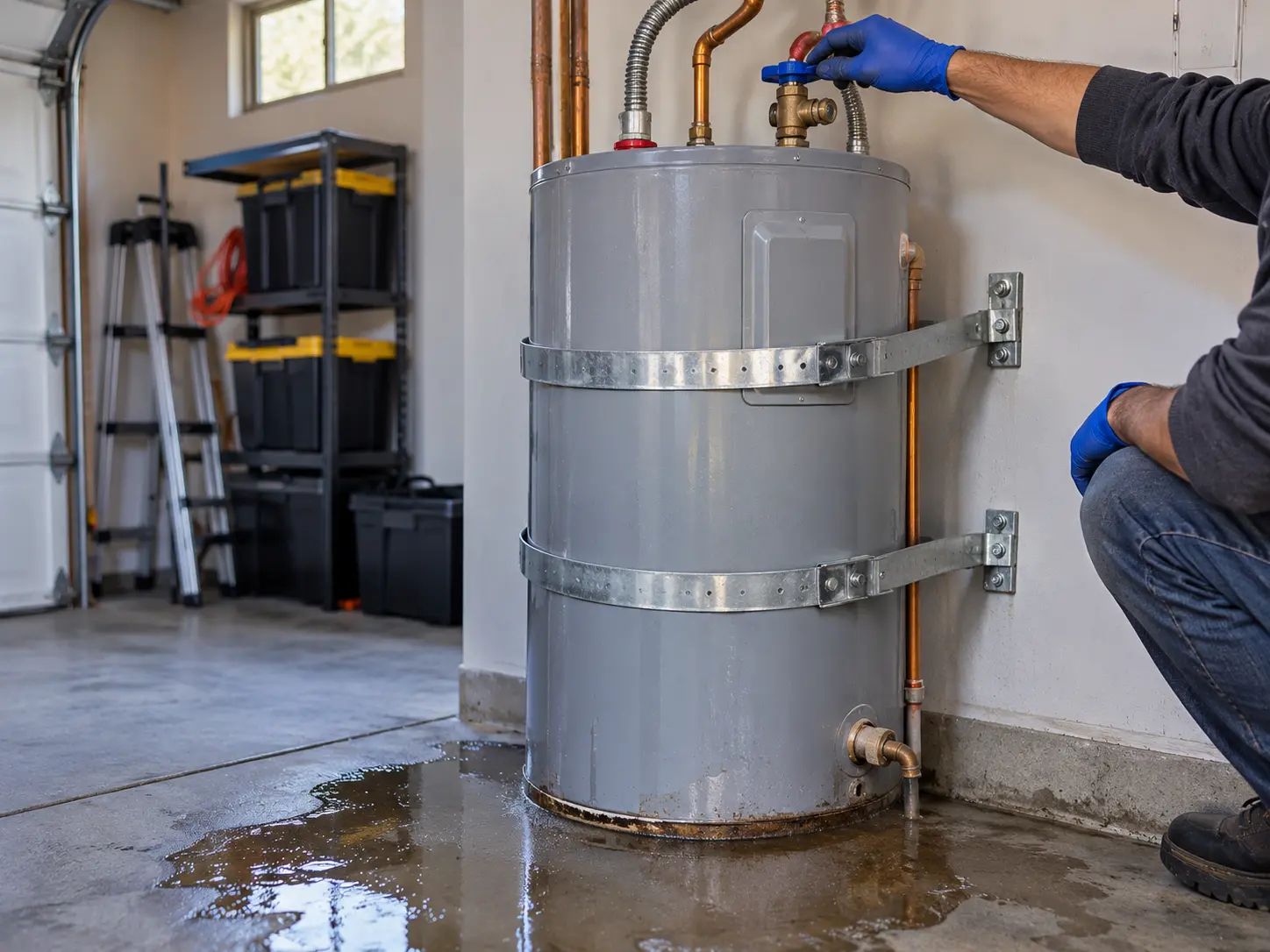
Find the cold water inlet pipe on top of the tank. It usually has a valve with a handle or a lever. Turn a handle clockwise until it stops, or turn a lever so it sits across the pipe. This stops the tank from refilling.
If that valve won't turn or is broken, close your home's main shut-off valve. It's usually where the water line enters the house, often near a front hose bib or in the garage.
Step 3: Find where the leak is coming from
Where the water comes from tells you how urgent the problem is. Dry the tank with a towel and watch where new water appears.
Don't try to plug or tighten the relief valve yourself. It's a safety device that keeps the tank from building up dangerous pressure.
Step 4: Get the water up and take photos
Before you clean up, take photos and video of the heater, its label, the source of the leak and every wet area. Then soak up standing water and move anything stored nearby. If water has reached carpet, drywall or the next room, mopping isn't enough.
Why water heaters wear out in Orange County
Hard water is a big part of it. The City of Anaheim puts its water hardness at about 300 parts per million, roughly 18 grains per gallon. The City of Orange's 2023 water quality report put average hardness at 16 grains per gallon. Water that hard leaves minerals behind inside the tank. Over time they settle as sediment at the bottom, which makes the heater work harder and can speed up wear.
Flushing the tank on the manufacturer's schedule helps clear that sediment.
The water you can't see
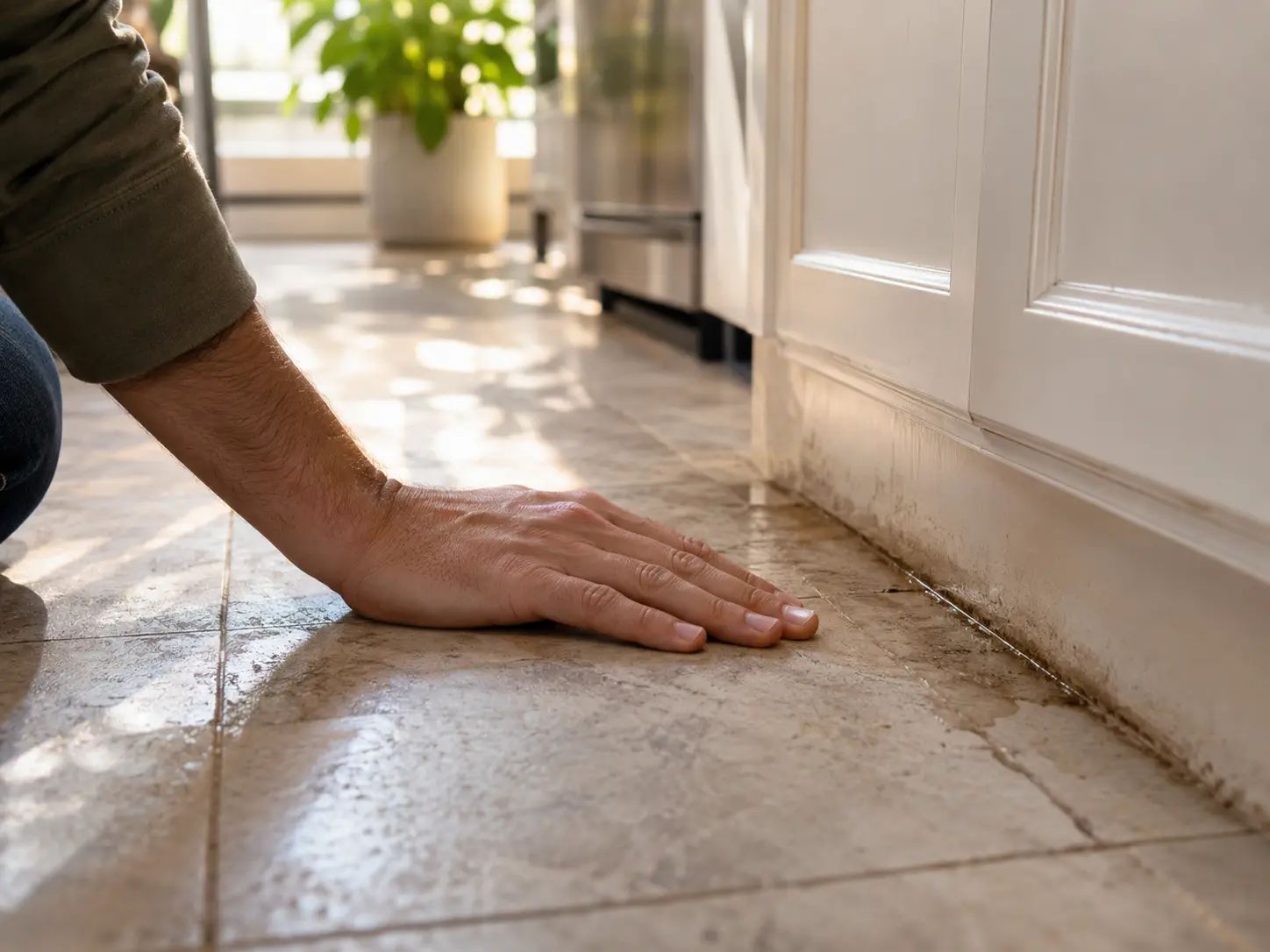
The puddle is the easy part. Water heaters usually sit in a garage, a closet or an attic. A slow leak spreads where nobody looks: the bottom of the closet wall, the baseboard, the subfloor and the next room.
The EPA says that "if wet or damp materials or areas are dried 24-48 hours after a leak or spill happens, in most cases mold will not grow." Drywall and wood can look dry and still hold enough moisture to start mold.
That's why it's worth checking with a moisture meter. Structural drying uses air movers and dehumidifiers to dry walls and floors from the inside, with daily readings until they hit a dry target. If there's still standing water, emergency water extraction comes first. If the leak has been going on long enough to smell musty, see our page on mold remediation.
Replacing the heater? Check the straps
California law requires water heaters to be braced, anchored or strapped to resist falling or moving during an earthquake (Health and Safety Code 19211). A tank that tips over in a quake can break its water and gas lines. When your new heater goes in, make sure it's strapped.
Who to call
A water heater leak usually needs two different calls:
- ✓A plumber to repair or replace the heater
- ✓A water damage company to remove the water and dry everything it reached
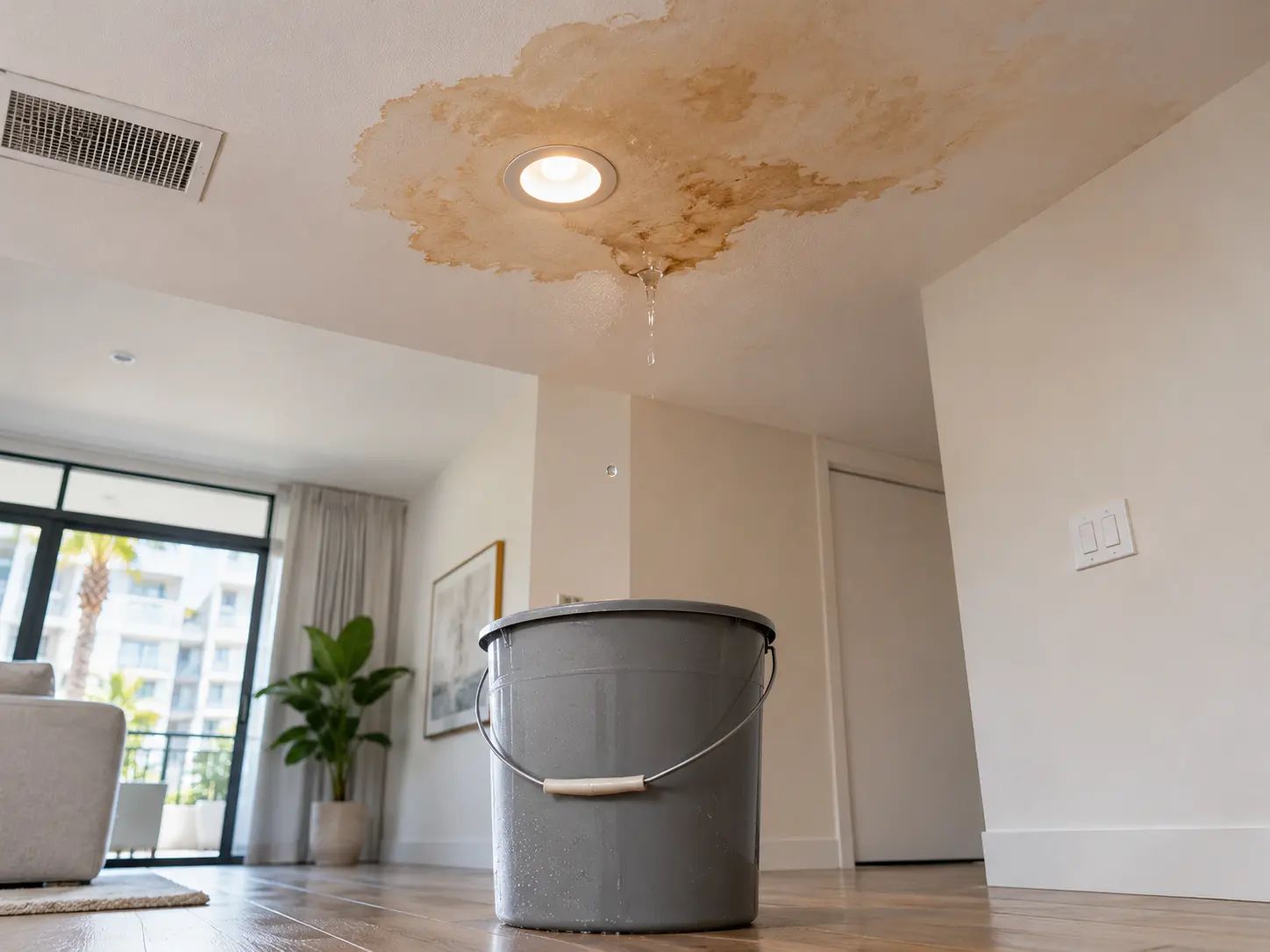
If an attic heater leaked through the ceiling, see our page on ceiling water damage.
If you plan to request compensation from your insurance company, keep the photos and video you took. A water damage company can also give you documentation: photos, daily moisture readings, a list of removed materials and a written scope of work. You can submit these to your insurance company. Whether a loss is covered is between you and your insurer.
Water heater leaking right now?
Close the cold water valve, turn off the power or gas and call Tustin Dry Out at [PHONE]. We answer 24 hours a day and cover water damage restoration in Tustin and Orange County, including Anaheim, Orange, CA and Irvine. We'll tell you what to do until we arrive.
Call [PHONE] →Quick answers
Q.Is a leaking water heater an emergency?
It can be. A tank that's leaking from the bottom can keep releasing water until you close the cold water valve. Shut off the water and power or gas right away, then decide on repair.
Q.Can a leaking water heater be repaired?
Leaks from fittings, the drain valve or the relief valve can often be repaired by a plumber. A leak from the tank itself usually means the tank needs to be replaced.