Mold Remediation in Tustin, CA
Contained, careful mold removal for homes in Tustin and North Tustin, along with the moisture problem that let it grow.
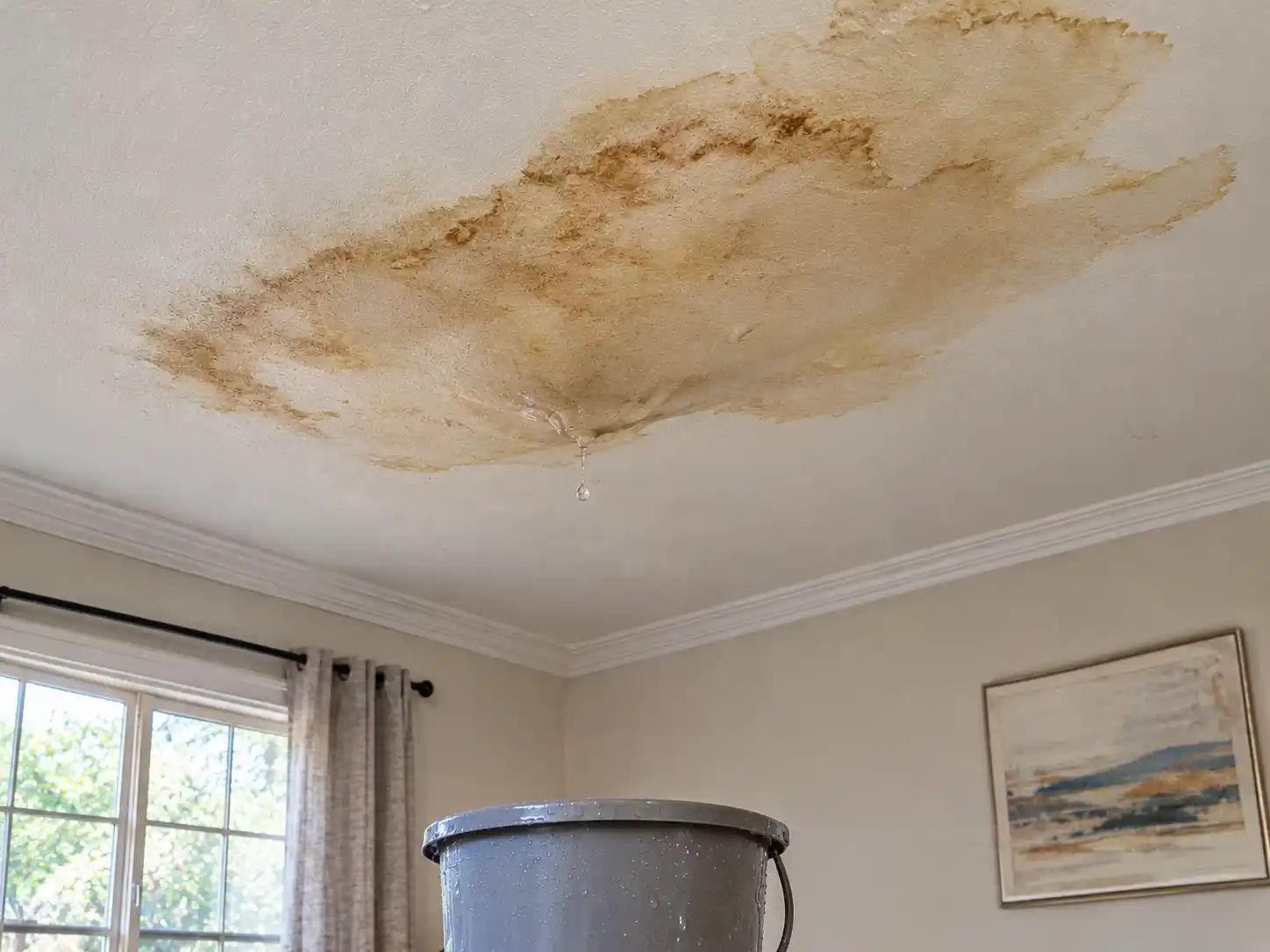
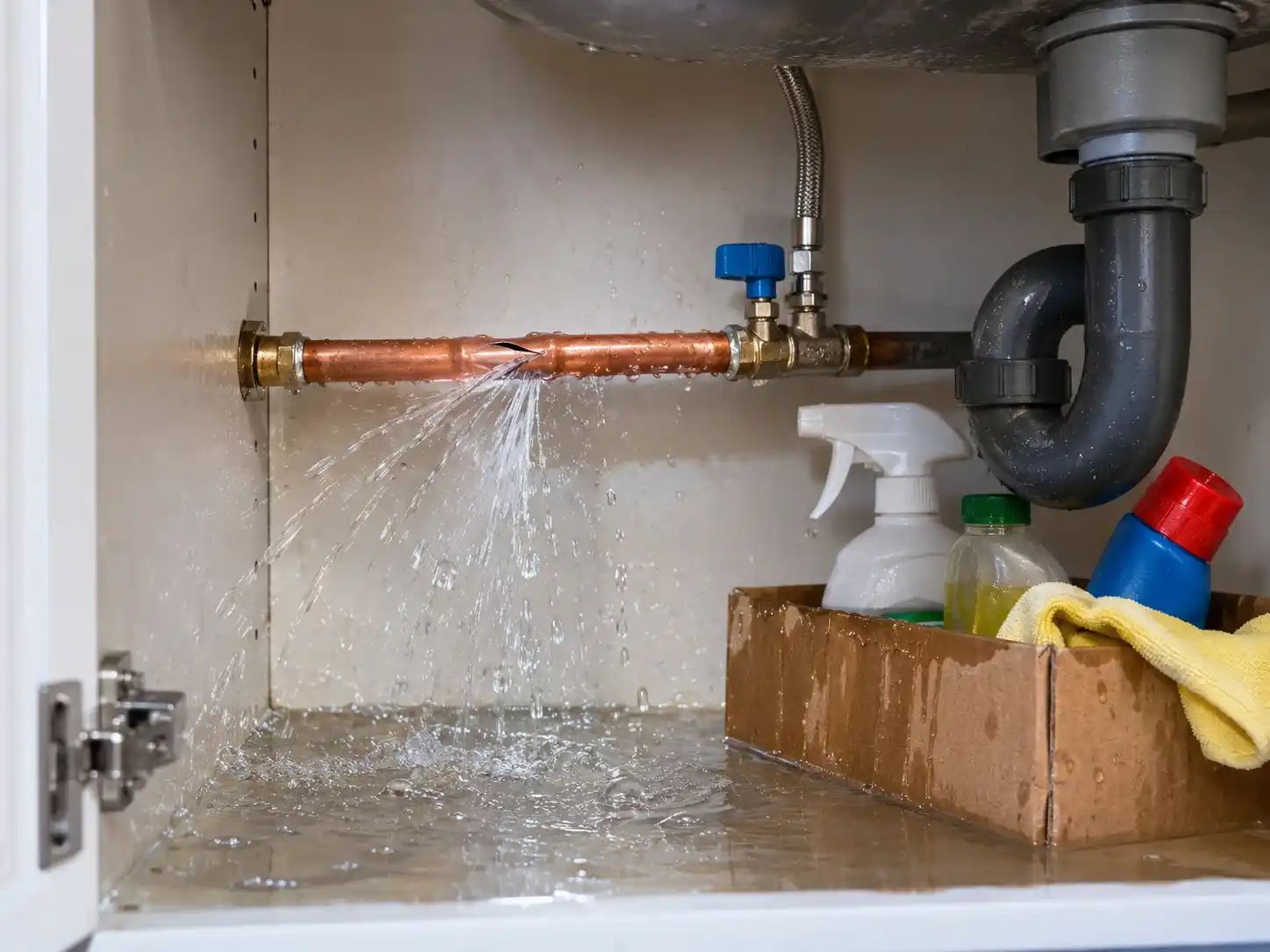
Mold doesn't appear out of nowhere. It grows where water was left behind: inside a wall after a slow leak, on a bathroom ceiling, behind a water heater in a closet. Mold remediation in Tustin starts by finding that water, because scrubbing the spots without fixing the moisture just brings them back.
Mold is a water problem first
The EPA puts it plainly: "The key to mold control is moisture control." Every mold job has two parts, and skipping either one means the mold returns.
The EPA also notes that "it is impossible to get rid of all mold and mold spores indoors." Spores are part of normal air. The goal of Tustin mold remediation is to remove the growth and take away the moisture it needs. Then the spores already in the air have nothing to grow on.
Signs of mold after water damage in Tustin
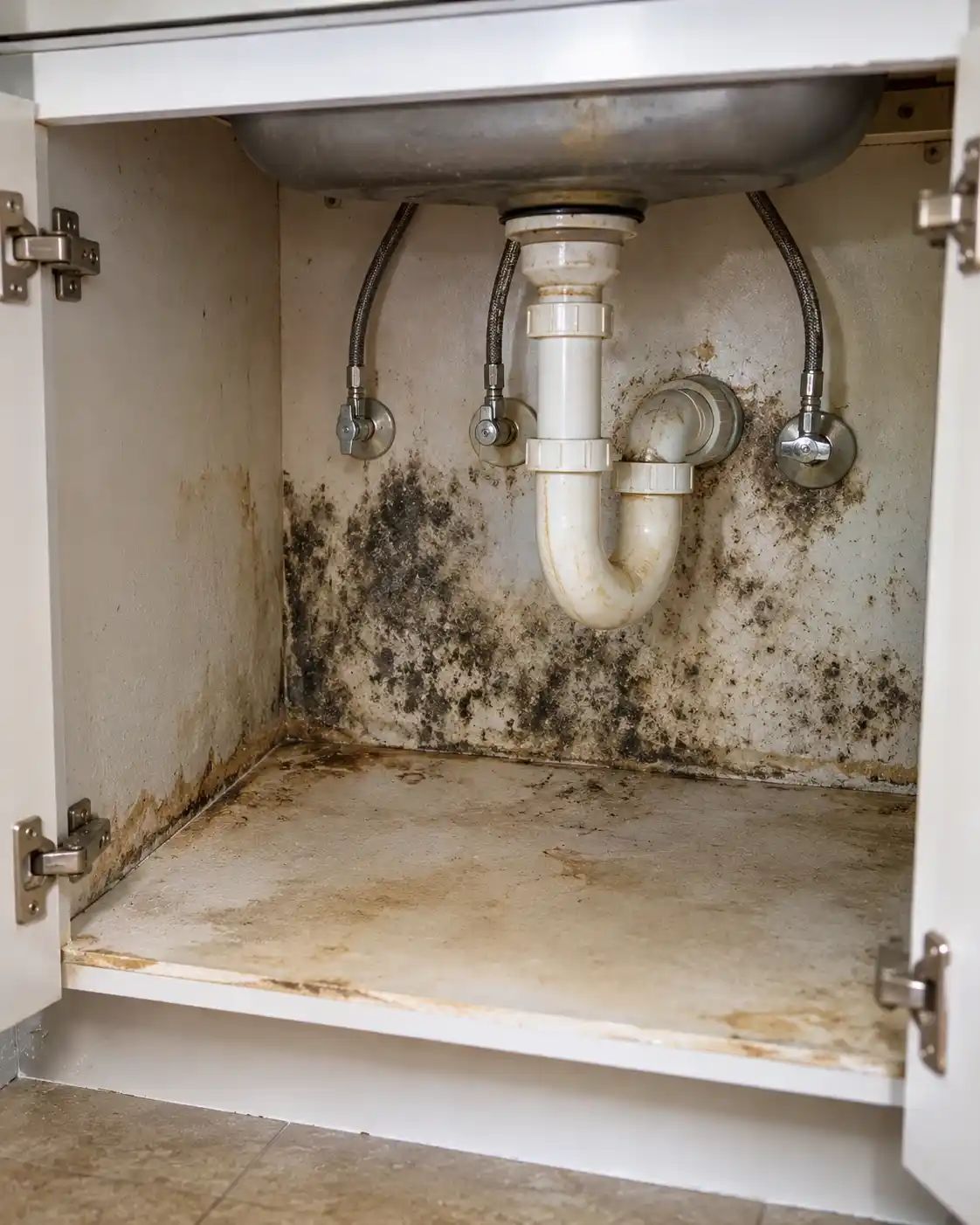
Mold after water damage in Tustin often shows up days or weeks after the leak looked dry. Watch for:
Mold inspection in Tustin: finding what's behind the wall
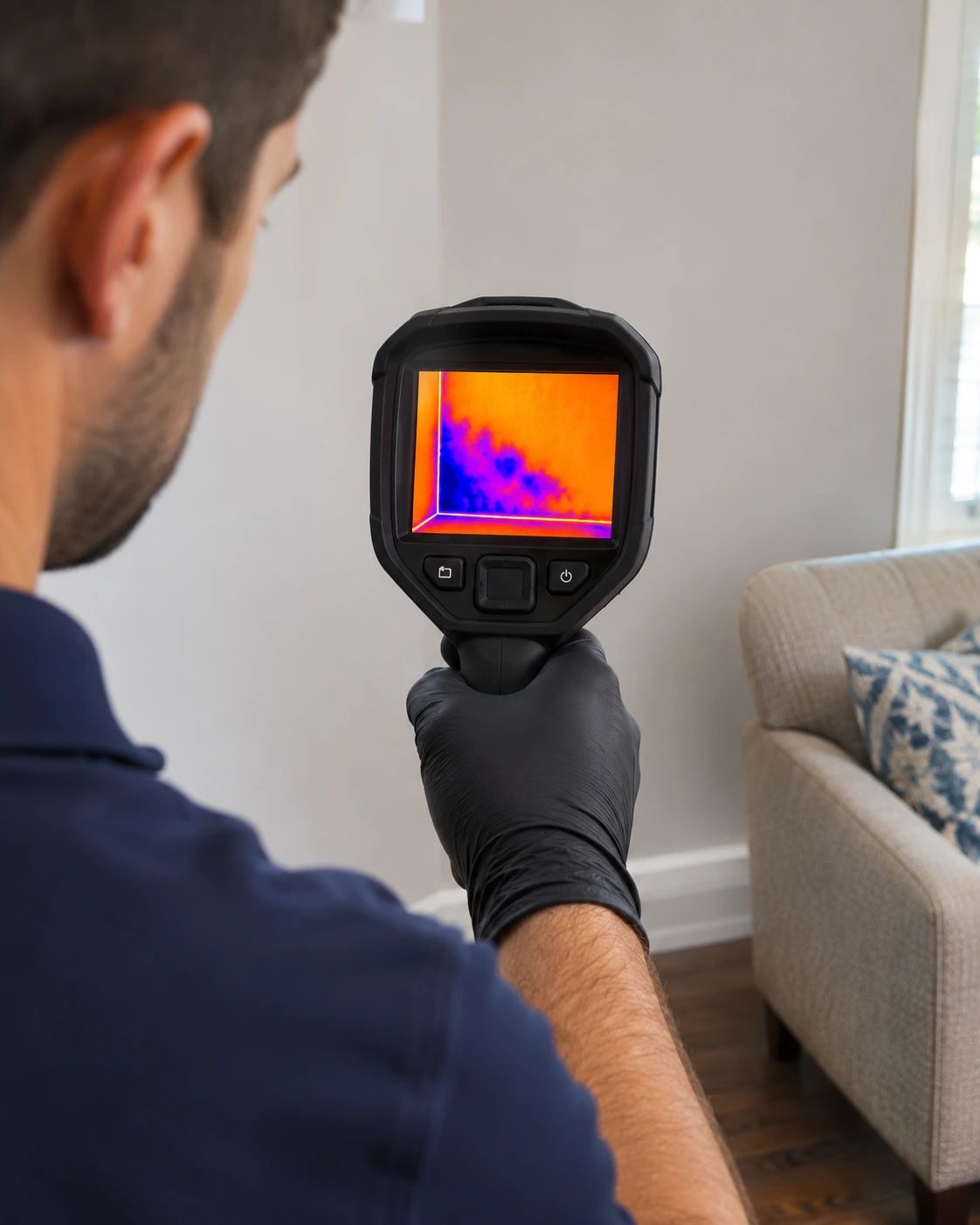
What you can see is usually the smallest part of the problem. A mold inspection in Tustin looks for the water feeding it.
You don't need to know what kind of mold it is. The CDC says, "It is not necessary to determine what type of mold you may have growing in your home or other building." Every type gets removed the same way.
How mold remediation services in Tustin work
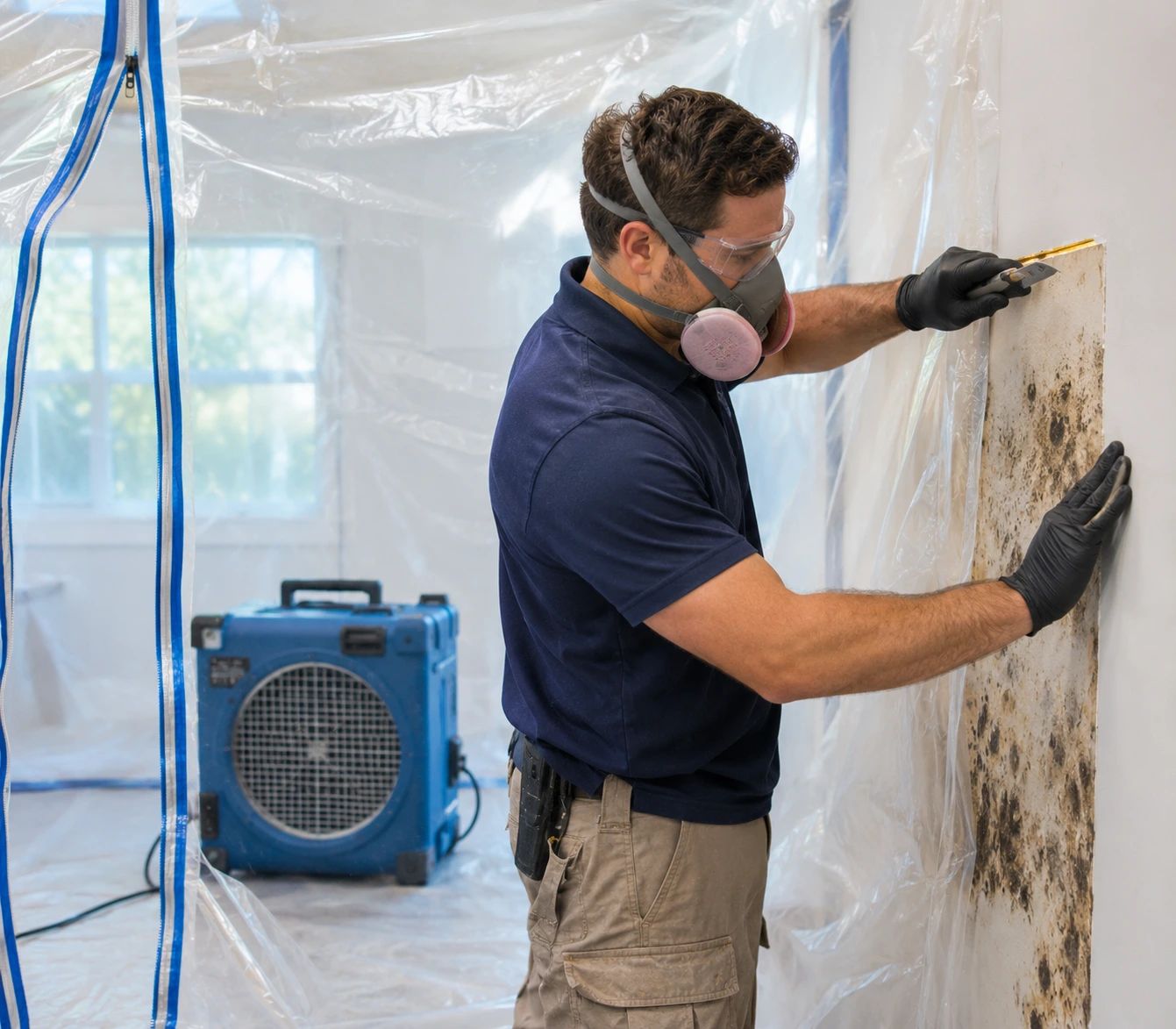
Every job follows the same order, so mold isn't spread to clean parts of the house while it's being removed.
- 1Contain the area.Plastic sheeting seals off the affected rooms. Negative air pressure keeps air, and the spores in it, from drifting into the rest of the home.
- 2Filter the air.HEPA air scrubbers run inside the containment to capture spores disturbed during the work.
- 3Remove moldy porous materials.Moldy drywall, insulation, carpet and pad are cut out, bagged and removed. The EPA notes that absorbent materials like these "may have to be thrown away if they become moldy."
- 4Clean what stays.Framing and other hard surfaces are HEPA vacuumed, scrubbed and treated so no growth is left behind.
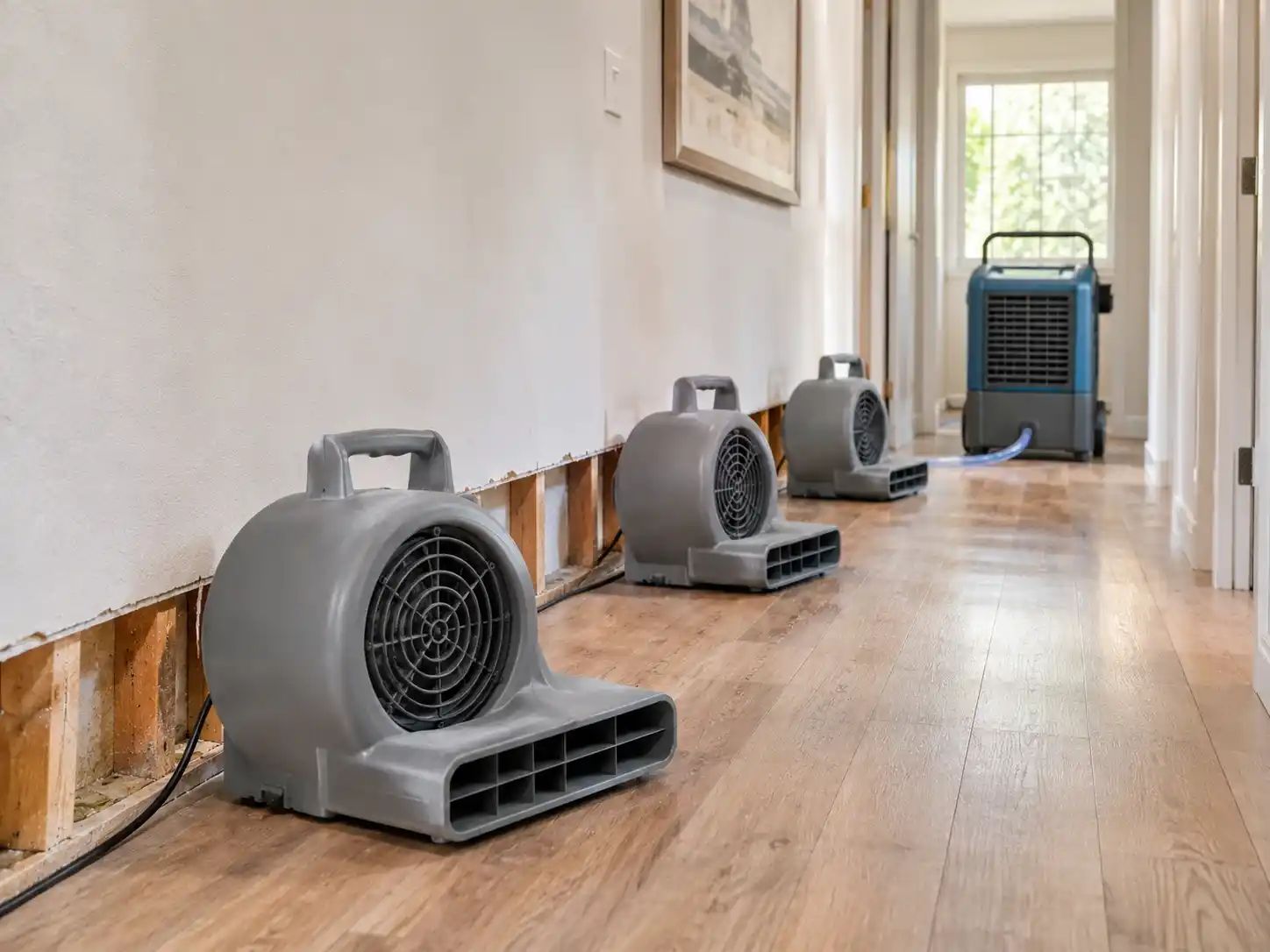
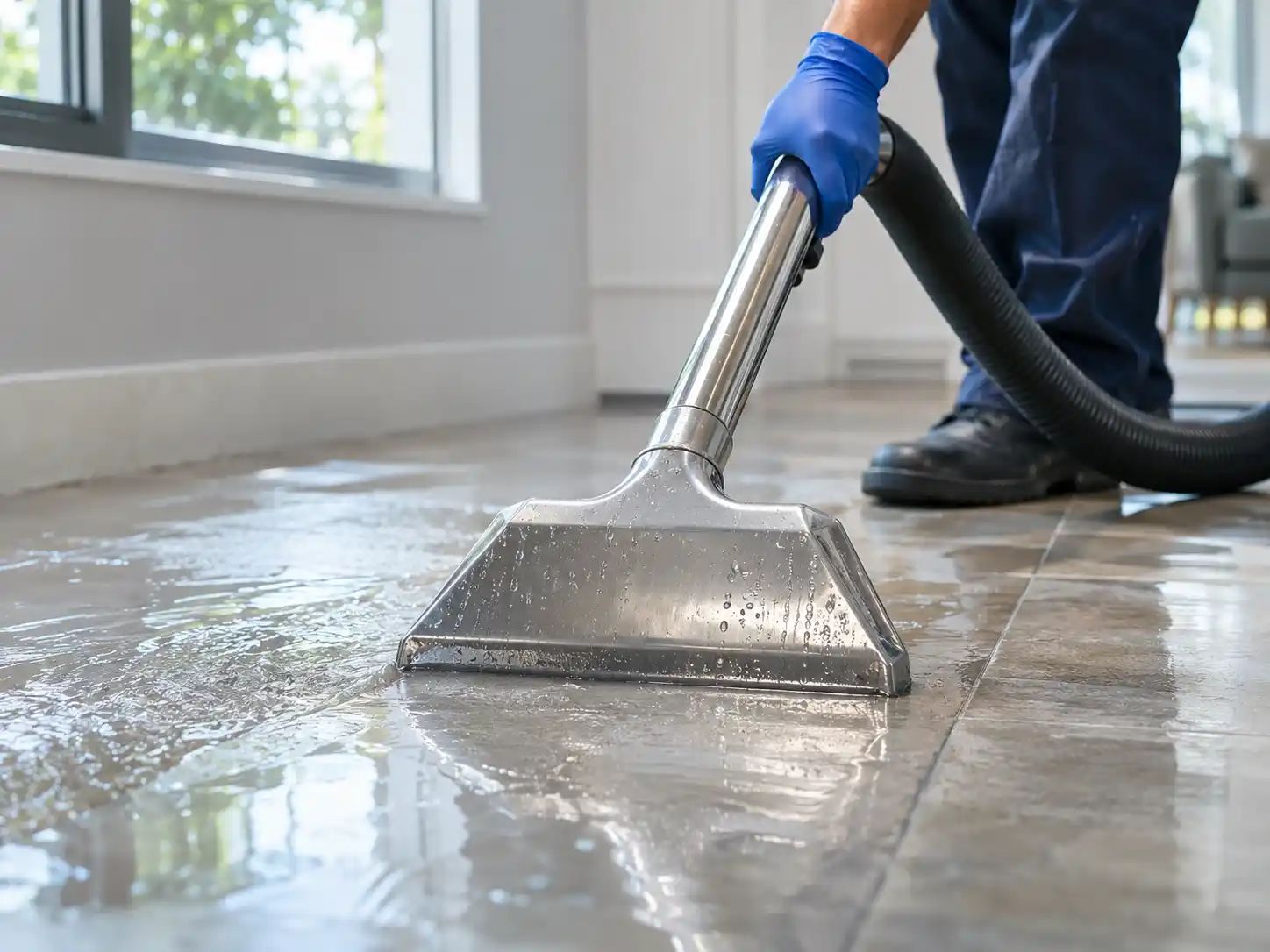
- 5Dry the structure.Air movers and dehumidifiers dry the area until moisture readings match a dry target.
- 6Check the work.Before containment comes down, the area is checked for visible mold and the moisture readings are confirmed.
Why we don't just spray bleach
Spraying bleach on mold, or painting over it, is a common shortcut, and it doesn't work. The EPA says bleach "is not recommended as a routine practice during mold cleanup." It also advises, "Do not paint or caulk moldy surfaces." Bleach can whiten the stain on the surface while the growth inside drywall or wood stays alive. The fix is physical: remove what's contaminated, clean what can be cleaned and dry everything.
Where mold shows up in Tustin homes
Mold grows wherever water and air stay trapped. In Tustin homes, these are the places to check first.
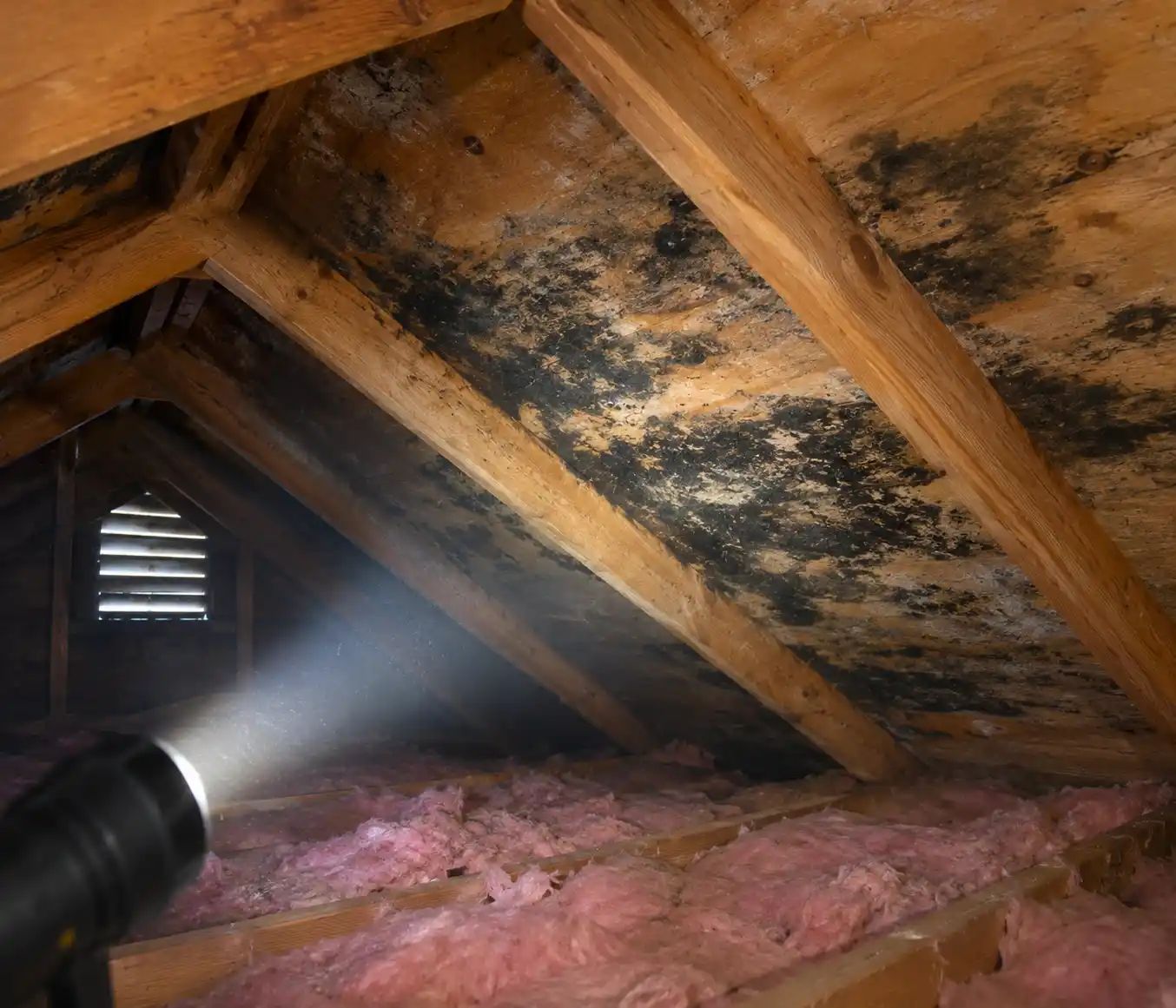
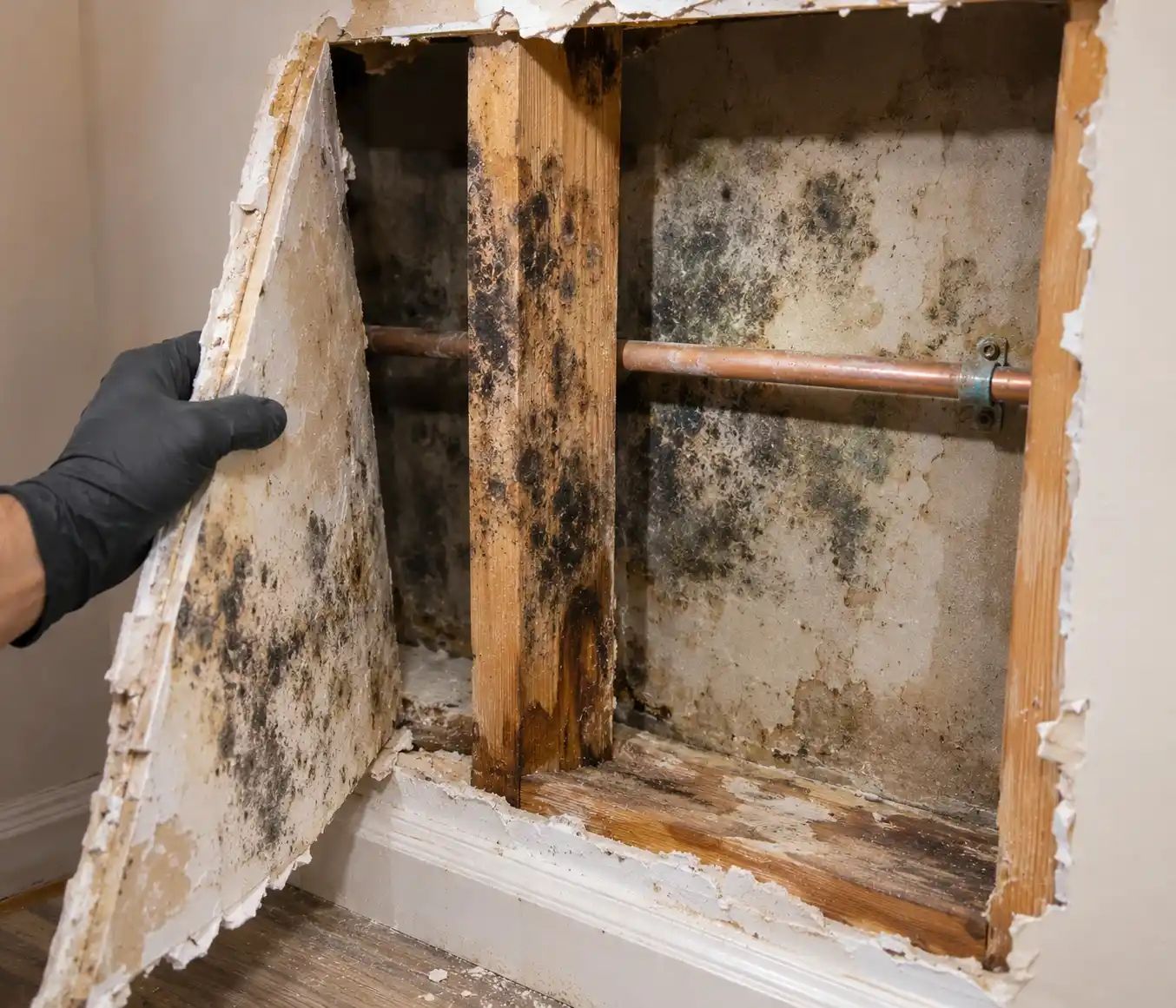
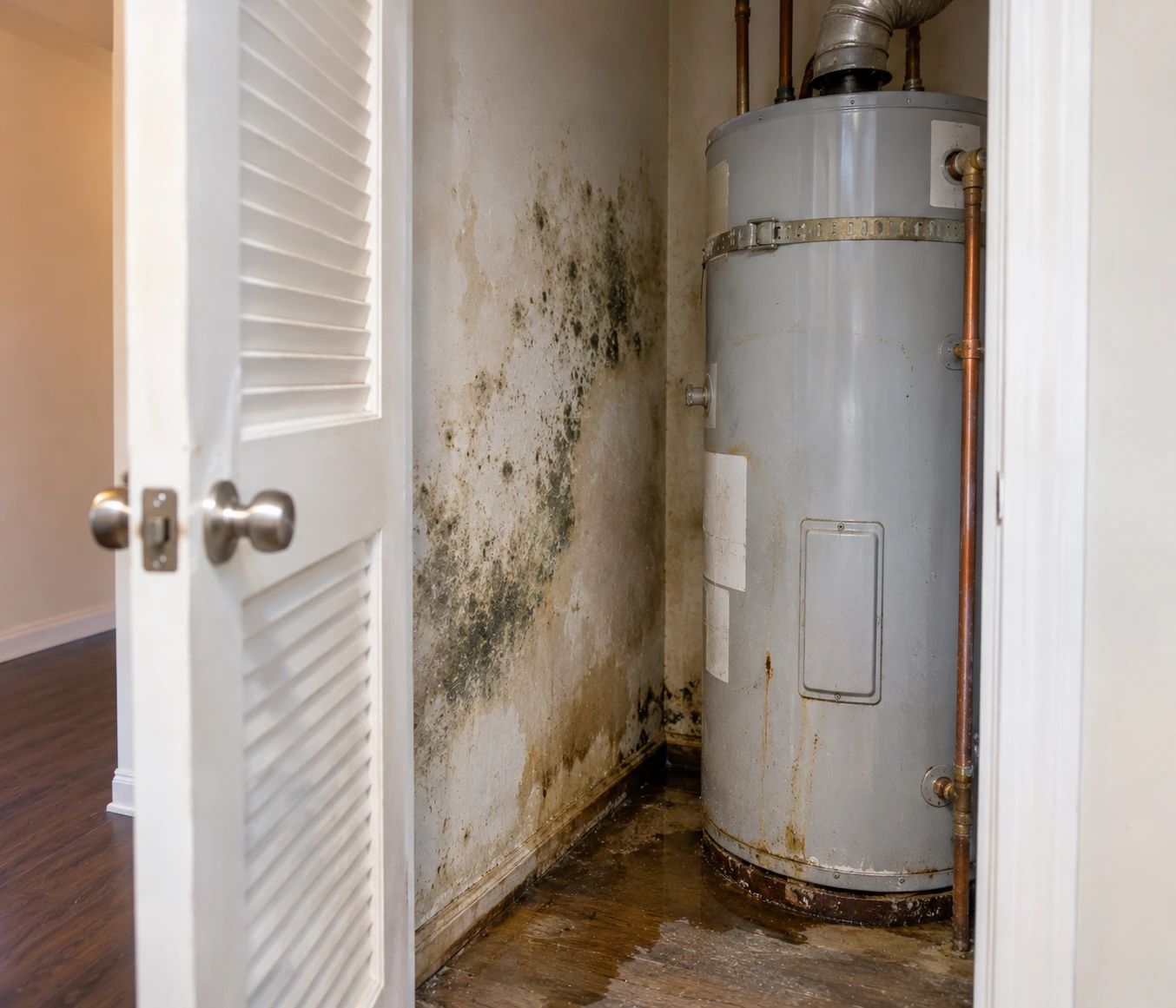
Bathroom mold removal in TustinAttic mold removal in TustinBehind walls after a leakWater heater closets and garages
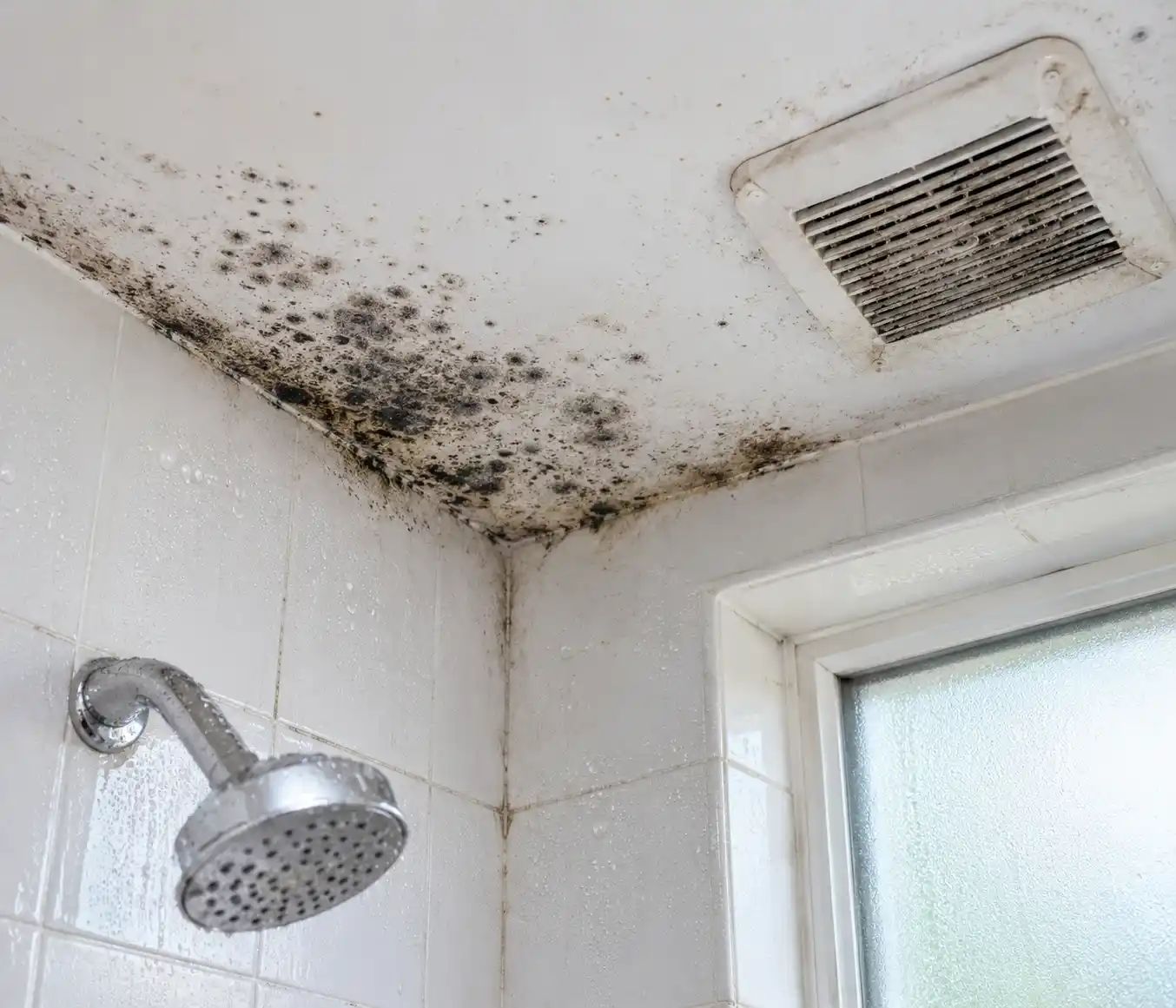
Showers, tubs and toilets put moisture into the air every day. When an exhaust fan is weak or isn't used, that moisture settles on the ceiling, around the window and behind the toilet. Bathroom mold removal in Tustin includes checking the wall behind the shower and the subfloor around the toilet, where a slow leak can hide for months.Attic mold often starts with a roof leak, a bathroom fan that vents into the attic instead of outside, or a water heater installed up there. Attic mold removal in Tustin covers the roof sheathing, the insulation and the ceiling below. The roof itself needs a roofer.A supply line that drips inside a wall can feed mold for weeks before a stain shows. This is how mold after water damage often stays hidden. Opening the wall at the wet spot shows how far it has spread.When a water heater leaks slowly, the wall and floor behind it stay damp and out of sight. Check behind and under the heater whenever you notice a musty smell nearby.
Black mold removal in Tustin: what the color tells you
Very little. "Black mold" usually means Stachybotrys chartarum, a greenish-black mold, but many molds look black. The CDC says "all molds should be treated the same with respect to potential health risks and removal." Black mold removal in Tustin follows the same containment and removal steps as any other mold. Color doesn't change the job. Size, location and the water behind it do.
Mold remediation in Tustin and Orange County
We provide mold remediation in Orange County across Tustin (92780, 92782), North Tustin (92705) and nearby cities. For local mold removal in Tustin, California, call [PHONE] any time.
What to expect from the best mold remediation company in Tustin
The best mold remediation company in Tustin for your home is one that shows you the work and fixes the cause. From any mold removal company in Tustin, expect:
Documentation for your insurance company
Every job is documented from the first visit. You receive:
You can submit these documents to your insurance company to request compensation. Whether a loss is covered is between you and your insurer. We don't make coverage decisions or promise any outcome.
Documentation starts on the first visit[PHONE] →How the cost is set
There is no fixed price for mold remediation. Cost is set after the job is assessed. It depends on how large the affected area is and where it is, such as an open wall or an attic. How much material has to be removed and how much drying the area needs also matter.
Found mold? Call before you scrub
Disturbing mold can spread spores to clean rooms. Call [PHONE] and tell us where you found it and whether there's been a leak nearby. We'll tell you what to do until we arrive. We answer 24 hours a day, 7 days a week.
Mold questions from Tustin homeowners
Mold remediation is removing mold growth safely and fixing the moisture that caused it. It includes containing the area, removing moldy porous materials like drywall and carpet, cleaning the surfaces that stay and drying the structure. Since mold spores are always in the air, the goal is to remove the growth and the moisture it needs, not every spore.
A small, contained area can often be finished in a day or two. Larger areas, mold hidden inside walls or an attic, or jobs that need several days of drying take longer. The timeline is set once the extent of the mold and the moisture is known.
That depends on your policy and your insurance company, so read your policy and contact your insurer early. What we provide is documentation: photos, moisture readings, an itemized list of removed materials and a written scope of work. You can submit these to your insurance company to request compensation.
Call for professional remediation when mold covers more than about 10 square feet, the EPA's guideline. The same goes for mold that grew after sewage or contaminated water. Mold in your heating or air conditioning system, or mold that keeps coming back after cleaning, also needs a professional. If anyone in the home has health concerns, the EPA advises talking with a health professional before cleanup starts.
For small areas, usually yes. The EPA says that if the moldy area is less than about 10 square feet, "in most cases, you can handle the job yourself." Scrub hard surfaces with detergent and water, dry them completely and fix the moisture source. Don't paint over mold, and expect to throw away moldy carpet or ceiling tiles.
People use both terms for the same job. Mold removal usually means taking out the visible growth. Mold remediation covers the whole process: containment, removal, cleaning, drying and fixing the moisture so the mold doesn't return.