Structural Drying in Tustin, CA
Walls, floors and subfloors dried after water damage, with moisture readings every day until the numbers say the job is done.
Once the standing water is gone, the hard part starts. Water has soaked into drywall, framing, subfloor and the concrete slab, and none of it shows from the outside. Structural drying in Tustin pulls that hidden water out before it turns into warped floors, crumbling drywall or mold.
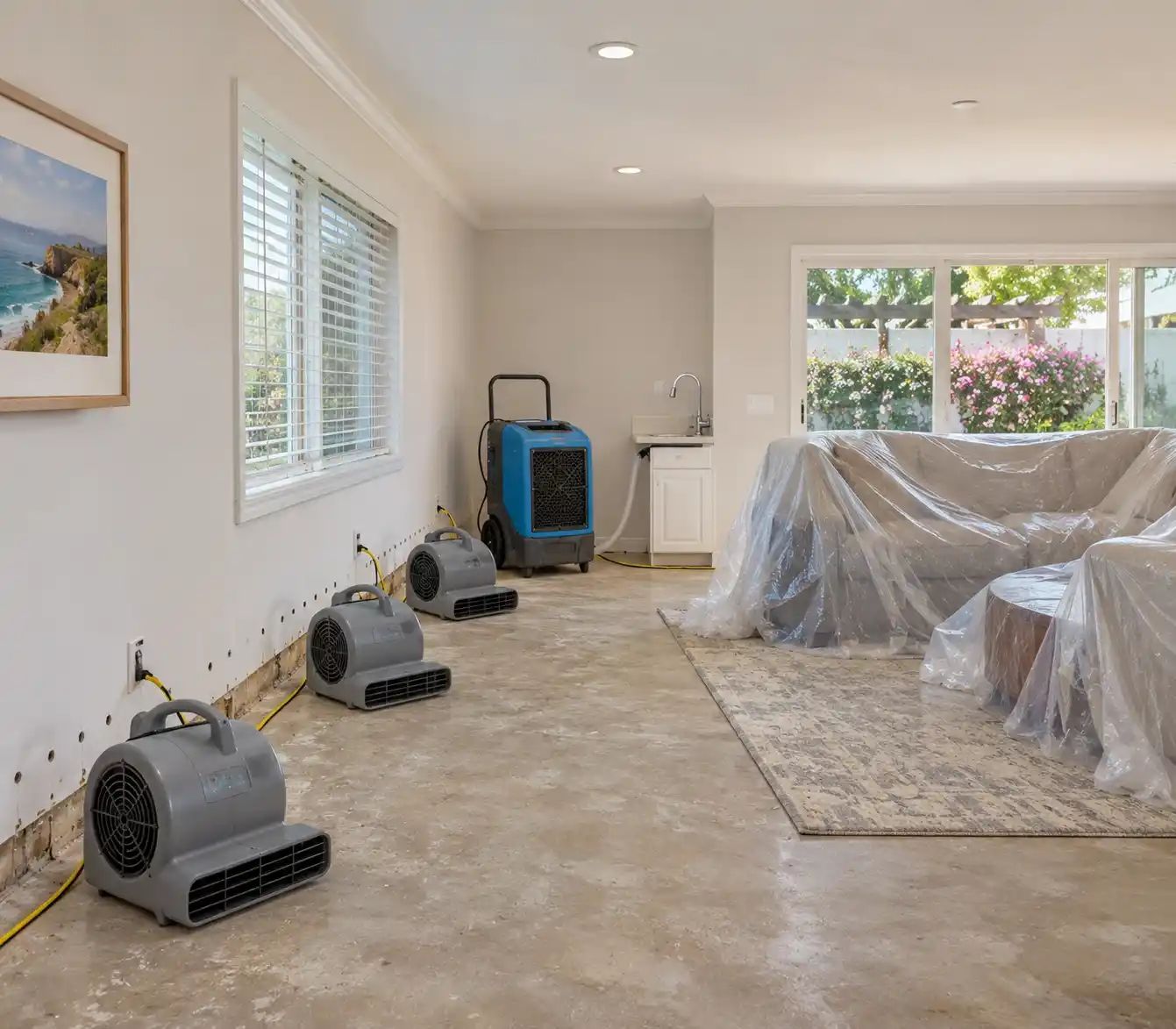
Dry to the touch isn't dry
A wall can feel dry within a day and still hold enough water inside to grow mold. Drywall wicks water upward, and framing and subfloor hold it long after the surface looks fine.
That is why structural drying services in Tustin, CA are measured with meters, not by touch. The EPA advises drying wet areas within 24 to 48 hours to prevent mold. The only way to know you've done it is to take readings until they match a dry reference.
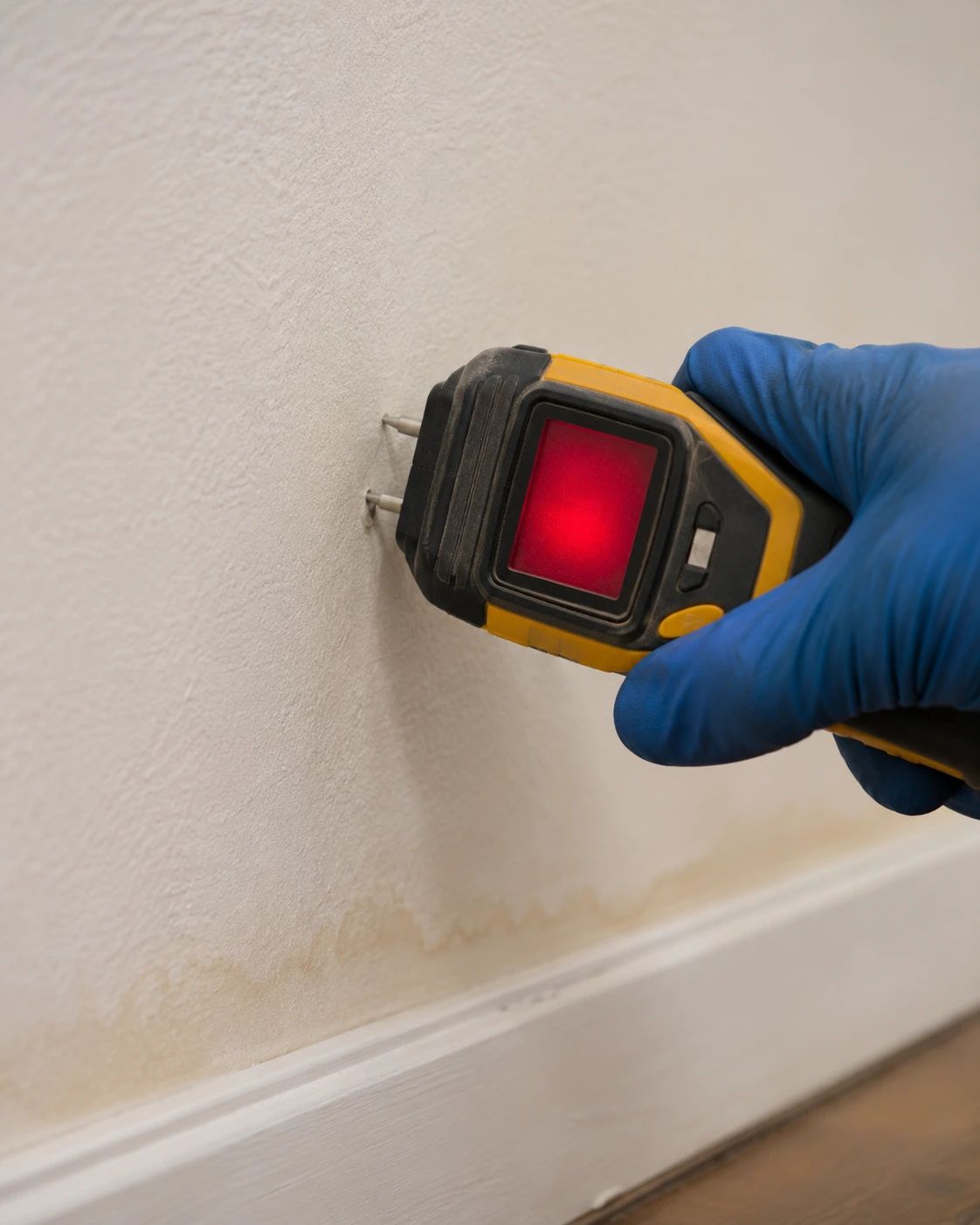
How drying actually works
Drying is three things working together: moving air, dry air and time.
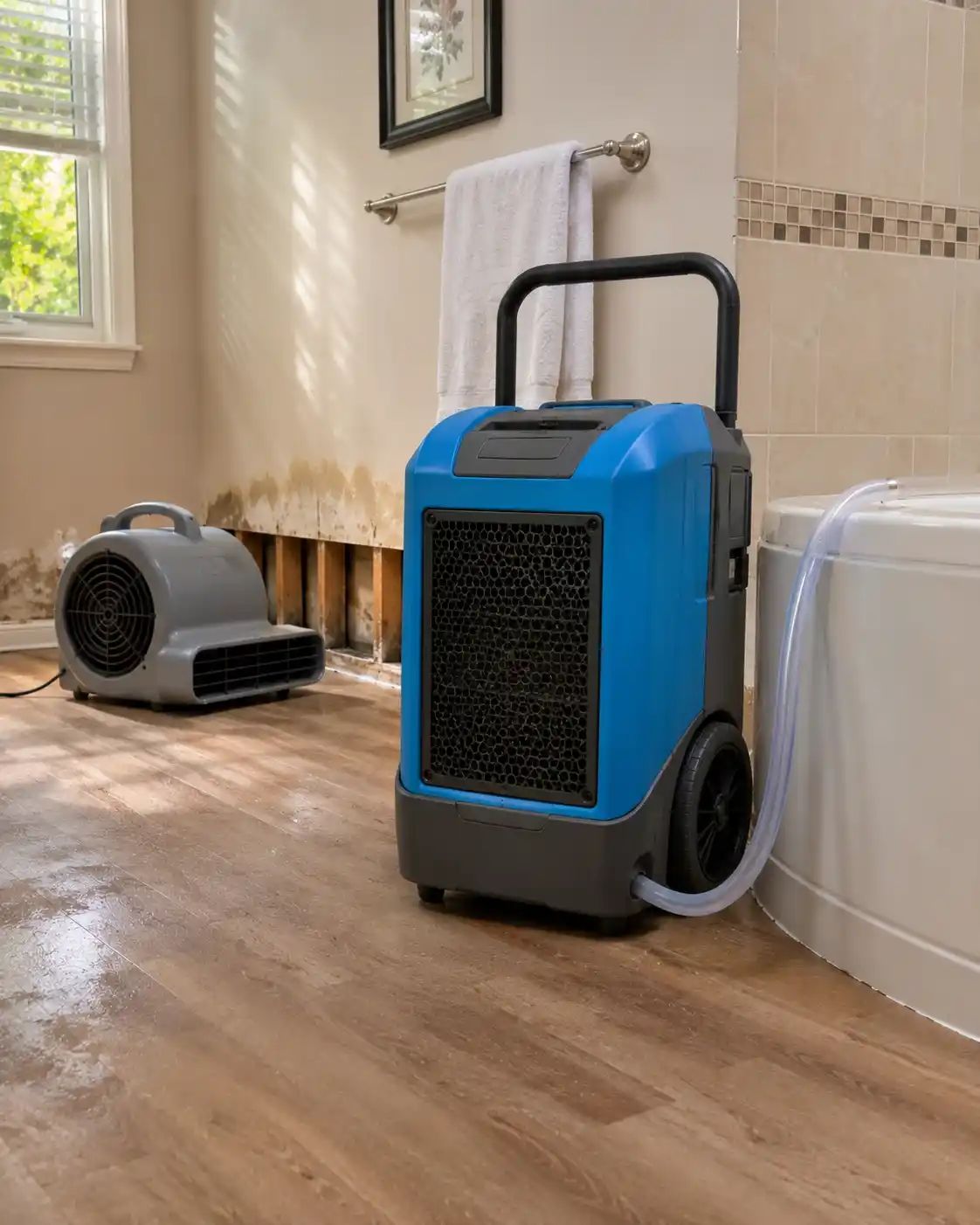
Our dehumidification services in Tustin use low grain refrigerant (LGR) dehumidifiers for most jobs. Desiccant units come in when the air needs to get drier than a standard unit can manage. The setup follows the IICRC S500, the industry standard for water damage restoration.
What gets dried, and what has to come out
Every material holds water differently. Here's how each one is handled.
Drywall drying in Tustin
Drywall soaked by clean water and caught early can often be dried in place. If it's sagging, crumbling or soaked by dirty water or sewage, it has to come out. Baseboards are usually pulled first so the bottom of the wall can breathe.
Wall cavity drying in Tustin
Water runs down inside the wall and pools on the bottom plate, where no fan can reach it. Wall cavity drying in Tustin uses small holes, often hidden behind the baseboard line, to push dry air through the inside of the wall. Wet insulation inside the cavity is usually removed.
Subfloor drying in Tustin
Plywood and particleboard subfloors swell and weaken when they stay wet. Subfloor drying in Tustin often means lifting carpet and pad so the wood can release its moisture. If the home has a crawlspace, the subfloor can also be dried from below.
Hardwood floor drying in Tustin
Wet hardwood cups, with the edges of each board rising above the center. Hardwood floor drying in Tustin uses drying mats that pull water up through the boards. Floors caught early can often flatten as they dry. Floors left wet too long may not recover.
Concrete slab drying
Concrete soaks up water and gives it back slowly. If your home sits on a slab, flooring laid back over it too soon can trap that moisture. The slab gets its own readings before anyone calls the job finished.
We handle water removal, drying and cleanup. Rebuild work such as new drywall, baseboards and flooring is not part of our service.
Your drying log, start to finish
Drying out a house after water damage in Tustin should never run on guesswork. You see the numbers at every stage.
- 1First visit.We map the wet areas with moisture meters and thermal imaging. Readings from a dry part of the house set the target, then air movers and dehumidifiers go in.
- 2Every day after.We take readings in the same spots, record them in your drying log, and move or adjust equipment as each area dries.
- 3Last visit.When every reading matches the dry target, the equipment comes out and you get the final log.
Equipment stays until the readings say the job is done, not for a set number of days.
Drying Tustin homes and businesses
Water damage drying in Tustin depends on how the building was put together.

Plaster walls in older homes
Older homes in and around Old Town Tustin may have plaster walls instead of drywall. Plaster is denser and tends to hold water longer, so it usually needs more time and closer monitoring.
Two-story homes in newer neighborhoods
In a two-story home, a leak upstairs soaks the floor, the ceiling below and the cavity in between. That space between floors has to be dried along with both surfaces.
Water heater closets and garages
When a water heater fails in a hall closet or garage, water spreads into the walls on every side. Each wall gets its own readings, because one dry wall says nothing about the next.
Commercial structural drying in Tustin
Offices, shops and rental units dry the same way homes do, just at a larger scale. Commercial structural drying in Tustin is planned around your business hours where possible, so you can keep working while the building dries.
Tustin structural drying, 24 hours a day
We provide structural drying in Orange County across Tustin (92780, 92782), North Tustin (92705) and nearby cities, including:
For moisture removal services in Tustin, call [PHONE] any time, day or night.
What to expect from the best water damage drying company in Tustin
The best water damage drying company in Tustin for your home is one that shows you the numbers. On every job, expect:
Paperwork you can give your insurance company
Your drying log is also your record. You receive:
You can submit these documents to your insurance company to request compensation. Whether a loss is covered is between you and your insurer. We don't make coverage decisions or promise any outcome.
How drying is priced
There is no fixed price for structural drying. Cost is set after the job is assessed. It depends on how much of the structure is wet and which materials are involved. How much has to be removed and how many days the equipment runs also matter.
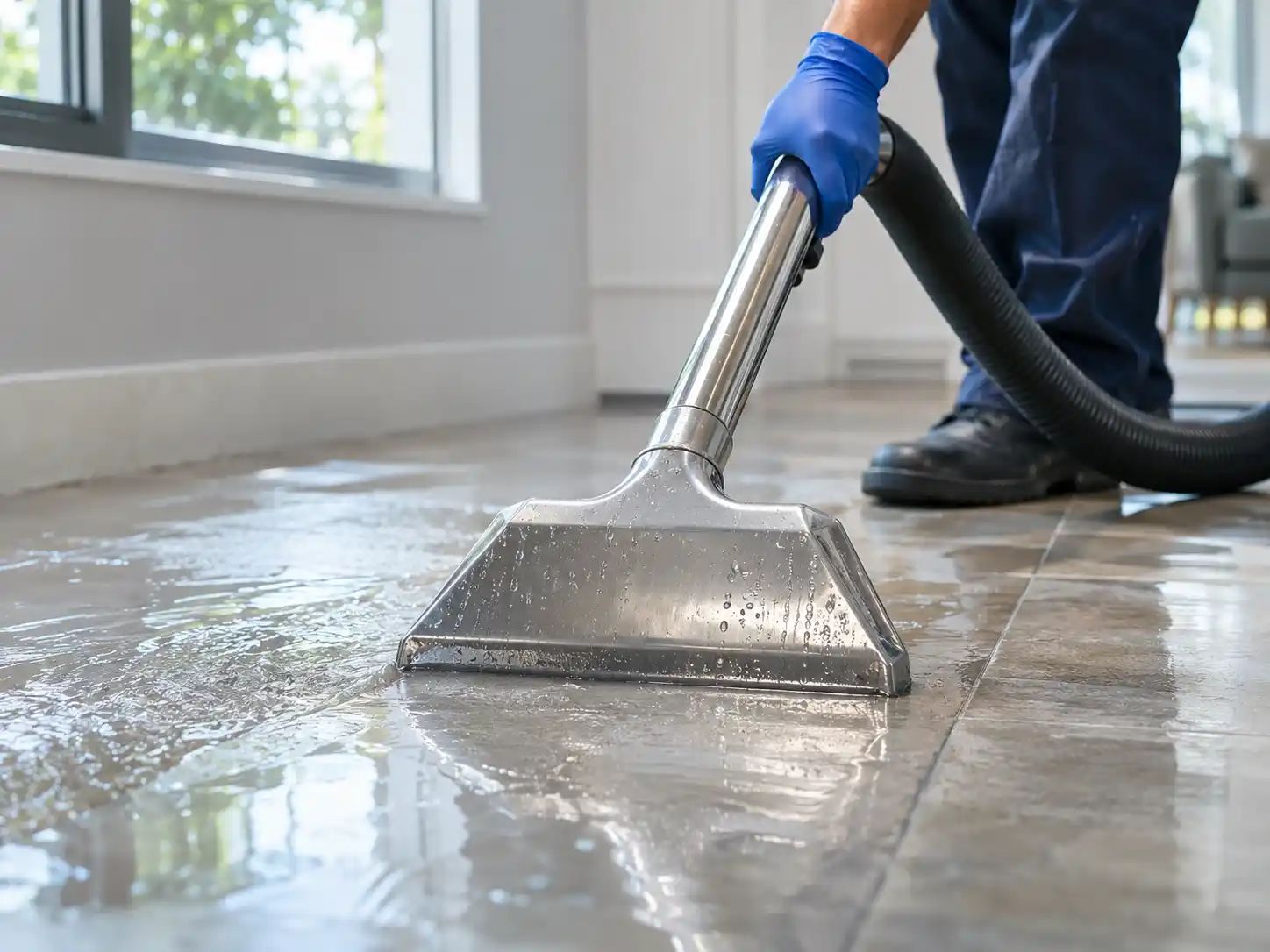
Walls or floors still wet?
Call [PHONE]. Tell us what got wet and when, and we'll tell you what to do until we arrive. We answer 24 hours a day, 7 days a week.
Structural drying questions from Tustin homeowners
Usually a few days. The exact time depends on how much water there was, which materials got wet and how long they stayed wet before drying started. Plaster, hardwood and concrete take longer than drywall. Daily readings show when each area reaches its dry target.
Often, yes, if clean water caused it and drying starts quickly. Drywall that is sagging, crumbling or soaked by dirty water or sewage has to be removed. The insulation behind wet drywall is usually removed too, because it holds water against the wall.
Moisture meters, not touch. Readings are taken from a dry wall of the same material elsewhere in the house to set a target. The wet wall is dry when its readings match that target, inside and out.
For a small spill on a hard floor that you wiped up right away, no. If water reached walls, went under flooring or sat for more than a few hours, yes. Fans alone move damp air around, and water left inside walls can start mold within 24 to 48 hours.