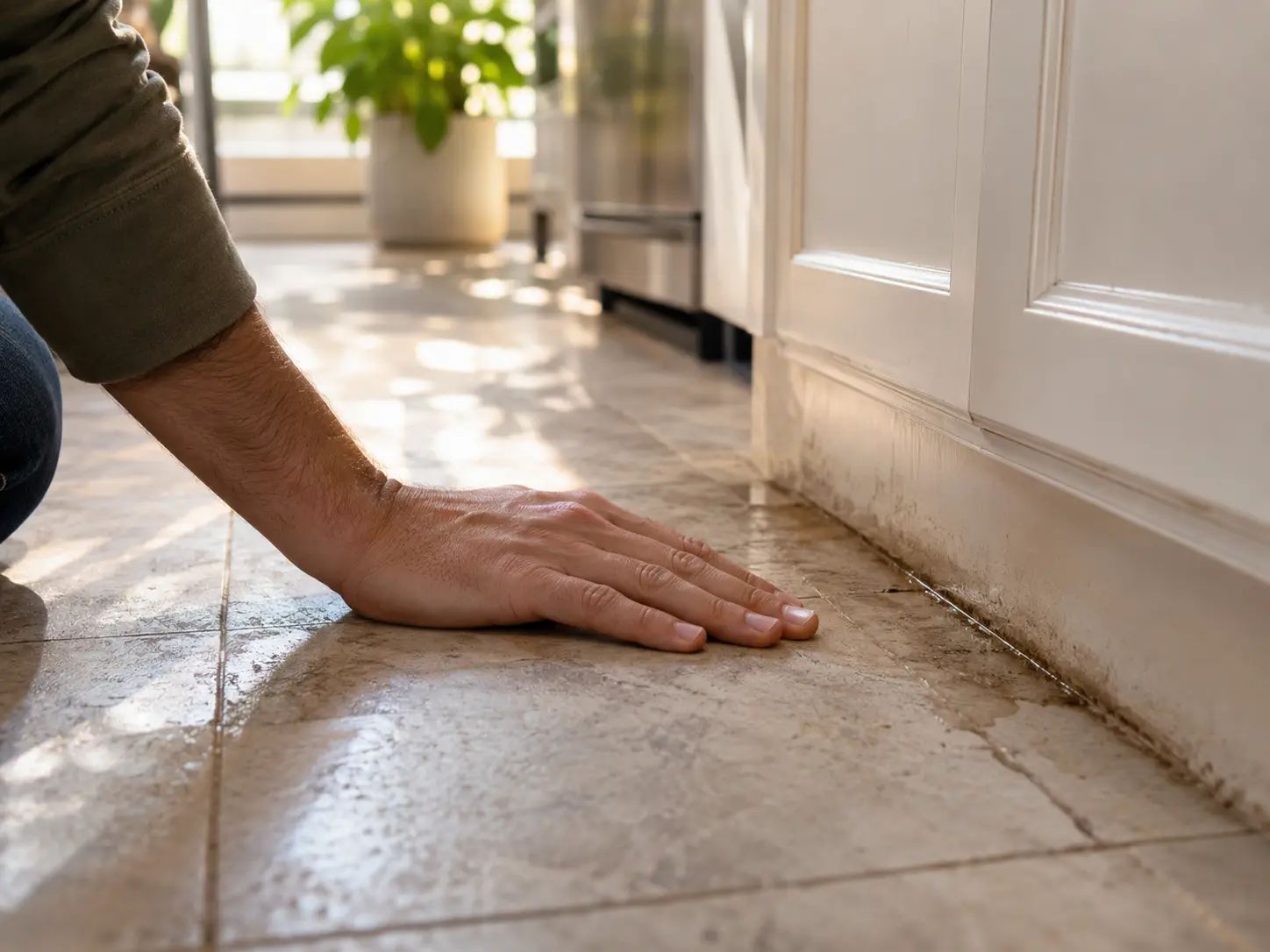
First 30 minutes: stop the damage
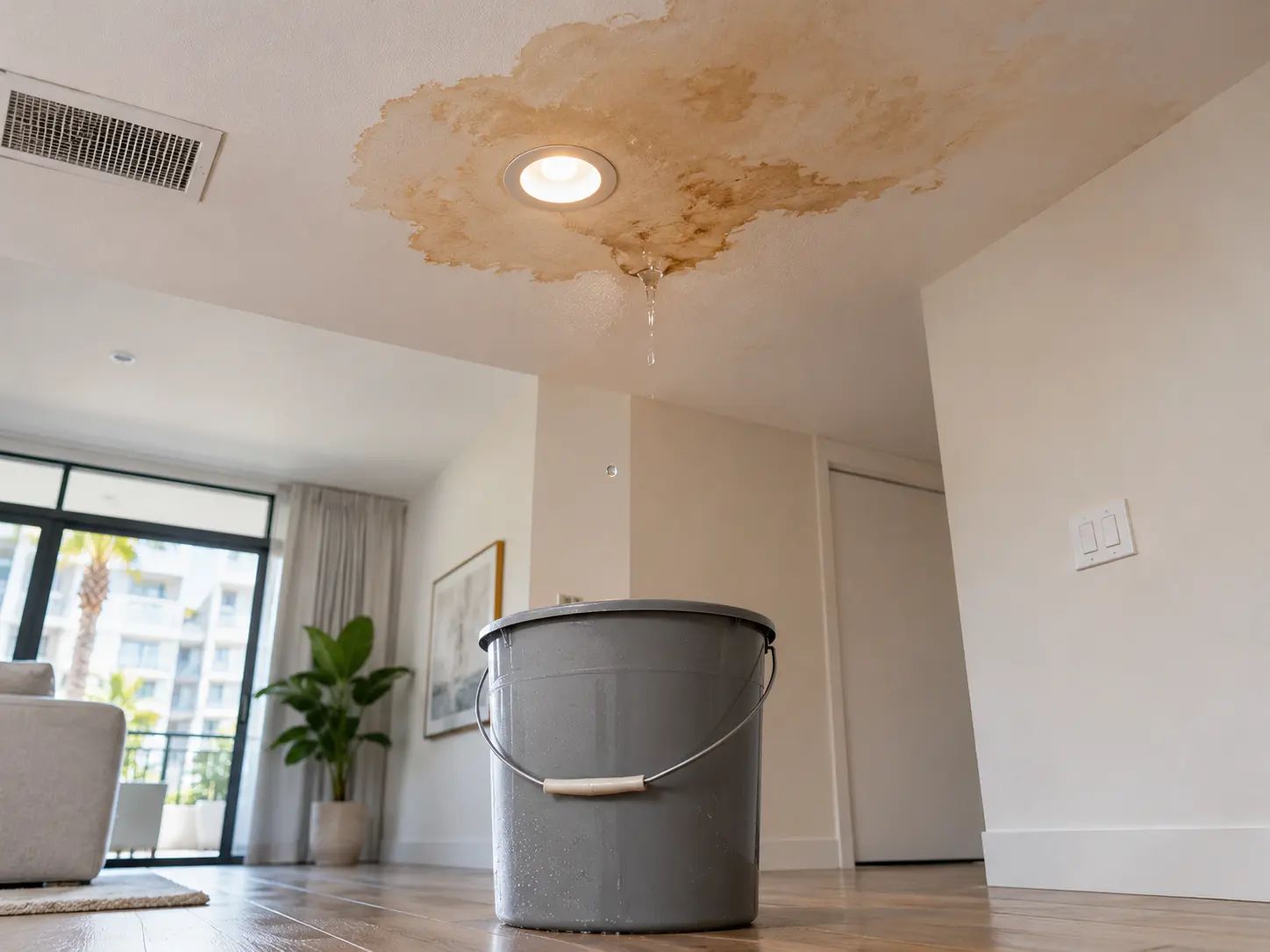
- 1Stay out from under any bulge or sag. Wet drywall is heavy and can come down without warning.
- 2Turn off power to the room at the breaker if water is near a light fixture, ceiling fan or outlet.
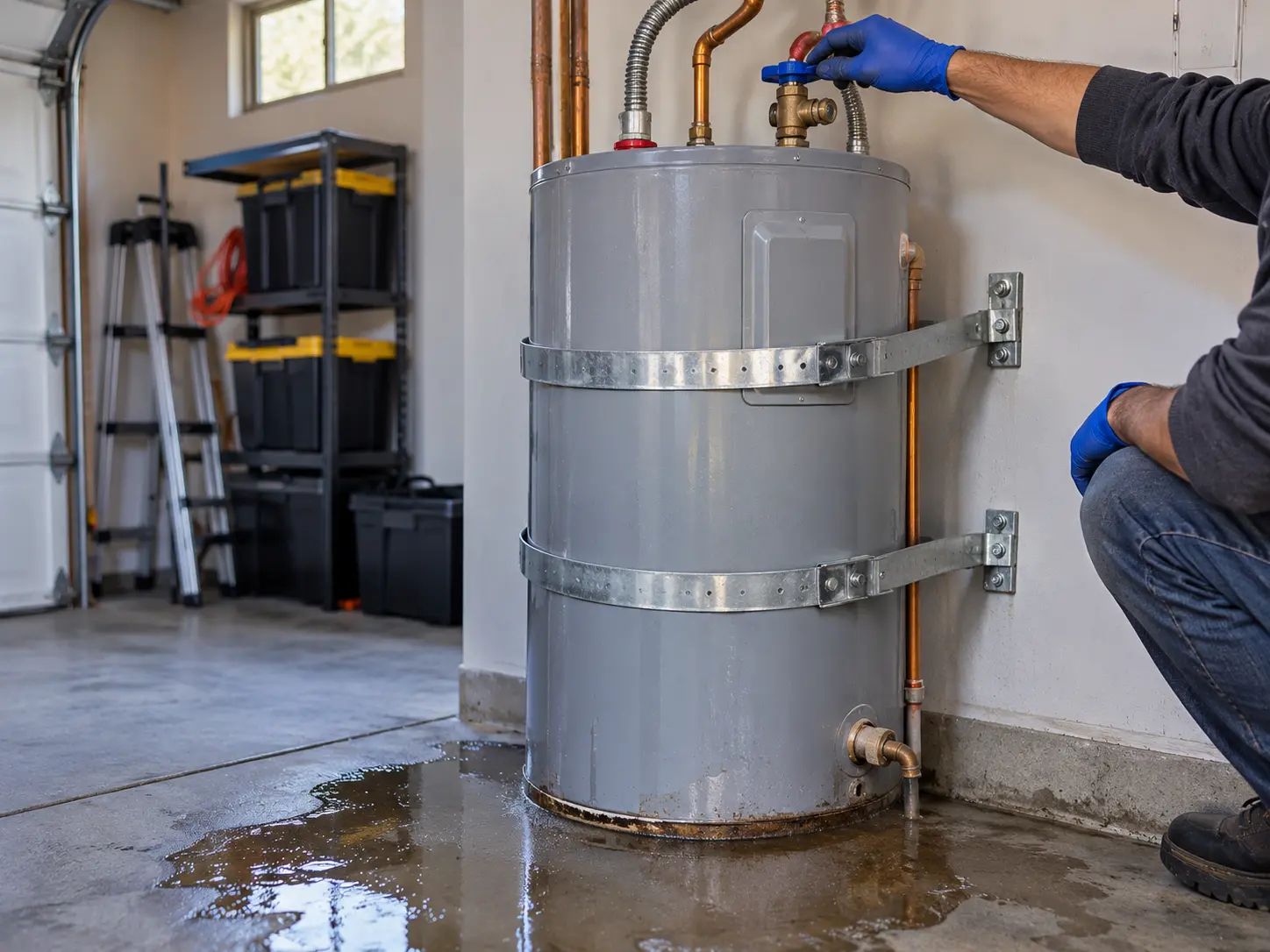
- 3Go upstairs or call your neighbor. They may not know there's a leak. A washing machine hose, toilet supply line or water heater is a common cause, and they can shut off the water.
- 4If no one answers, call your HOA or property manager. Many buildings have a way to shut off water to a unit or a section of the building.
- 5Put buckets down and move belongings away from the wet area.
- 6Take photos and video of the ceiling, walls, floors and damaged belongings before anything is moved or thrown away.
Who is responsible in a California condo?
It depends on where the leak started and what your CC&Rs say. California's default rules for common interest developments, including most condos and townhomes, are in Civil Code 4775.
The default rule
Civil Code 4775 says "the association is responsible for repairing, replacing, and maintaining the common area," unless the governing documents say otherwise. It also says "the owner of each separate interest is responsible for repairing, replacing, and maintaining that separate interest," meaning their own unit.
In practice, that often means:
- ✓A leak that starts inside the upstairs unit, such as a toilet, a sink supply line or a washing machine, is usually tied to that owner's unit.
- ✓A leak that starts in a common area, such as a shared pipe inside a wall or the roof, is usually tied to the association.
Your CC&Rs can change the default
Many CC&Rs spell out which pipes, walls and fixtures belong to the owner and which belong to the HOA. Read yours, or ask your HOA for the section on maintenance responsibilities.
When water service is cut off
Civil Code 4775 also covers repairs to restore interrupted water service that begins in the common area, even if it extends into a unit. It says the board "shall commence the process to make the repairs necessary to restore gas, heat, water, or electrical services... within 14 days of the interruption of services."
This is general information, not legal advice. For a dispute about responsibility, talk to your HOA and, if needed, a California attorney who handles HOA matters.
Renting the condo?
If you rent, tell your landlord about the leak in writing right away and keep a copy. California law requires rental homes to have plumbing kept in good working order (Civil Code 1941.1). Your landlord or property manager can then coordinate with the HOA and the upstairs owner.
Why waiting on the answer costs more
Responsibility can take days or weeks to settle. Drying can't wait that long.
The EPA says that "if wet or damp materials or areas are dried 24-48 hours after a leak or spill happens, in most cases mold will not grow." An upstairs leak soaks the drywall, insulation and framing between floors. If that stays wet, mold can grow behind your ceiling while everyone waits.
Drying promptly keeps the damage from growing. Responsibility can be sorted out later using the job records.
Documentation that helps everyone
When more than one owner and an HOA are involved, good records make the conversation easier. Keep:
- ✓Photos and video of every affected room, taken before anything is moved
- ✓The date and time you first noticed the leak, and who you contacted
- ✓Written notices you sent to the upstairs owner, HOA or landlord
- ✓Moisture readings showing where the water went and when it was dry
- ✓A list of removed materials and a written scope of work
A water damage company can provide most of these, with separate records for each affected unit.
If you plan to request compensation from your insurance company, you can submit these documents. The upstairs owner, the HOA and you may each have a separate policy. Whether a loss is covered is between each party and their own insurer.
Water coming through your ceiling right now?
Call Tustin Dry Out at [PHONE]. We answer 24 hours a day and work in condos and townhomes across Orange County, including Irvine, Santa Ana, Costa Mesa and our home base, Tustin.
Call [PHONE] →Quick answers
Q.Who pays when water leaks from an upstairs condo?
It depends on where the leak started and what your CC&Rs say. Under Civil Code 4775's default, each owner handles their own unit and the HOA handles the common area. Your governing documents can change that.
Q.Should I wait for the HOA before drying my unit?
Tell the HOA right away, but don't let drying wait. Wet materials left more than 24 to 48 hours can start growing mold. Document everything so the records are there when responsibility is decided.